
Today, we're excited to share with you a comprehensive guide on how to make almond flour. Whether you're an experienced home cook or just starting your culinary journey, this step-by-step guide will help you create almond flour that's perfect for a variety of recipes. Making your own almond flour is reasonably easy and not too much of a chore. It's a good process to have in your repertoire in case you can't find almond flour in the grocery store or if you prefer to have homemade flour made from scratch.

Want to Save This Recipe?
Enter your email & I'll send it to your inbox. Plus, get great new recipes from me every week!
By submitting this form, you consent to receive emails from We Made This Vegan.
This post contains affiliate links and I may receive a small commission if you visit a link and buy something. Purchasing via an affiliate link doesn't cost you any extra, and I only recommend products and services I trust. I may have been sent products featured here as a gift or paid to include them in coverage. Thank you for supporting this blog.
Why Make Almond Flour?
Almond flour is a versatile and nutritious ingredient that's a staple in many vegan and gluten-free kitchens. It's made from finely ground almonds and can be used in baking, cooking, and even as a topping for various dishes. Here are a few reasons why you might want to make almond flour at home:
- Cost-Effective: Buying almond flour from the store can be expensive. Making your own flour at home can save you money, especially if you buy almonds in bulk.
- Freshness: Homemade almond flour is fresher than store-bought varieties, which can sometimes sit on shelves for months.
- Customization: You can control the texture and consistency of your almond flour, making it perfect for specific recipes.
- Dietary Needs: Making your own almond flour ensures there are no additives or preservatives, keeping it 100% natural and suitable for various dietary requirements.
Equipment needed to make almond flour
Before we dive into the process, let's make sure you have all the necessary equipment:
- Food Processor with Blade Attachment: A high-quality food processor or high-speed blender is essential for grinding the almonds into a fine flour.
- Silicone Spatula: This will help you scrape down the sides of the processor and ensure even grinding.
Ingredients
- 30 oz Raw or Blanched Almonds
- Water (if soaking the almonds)

Instructions for Making Raw Almond Flour
- Prepare the Almonds: Add the almonds to your food processor.
- Blend: Process the almonds for 5-7 minutes. About halfway through, stop the processor and use your silicone spatula to move the nuts around, ensuring even grinding.
- Check the Consistency: Once the almonds turn into a fine flour, stop the processor and check the consistency. If it's fine enough for your needs, you're done!

Instructions for Making Blanched Almond Flour
Blanching almonds before making flour can give a slightly different texture and flavor, which might be preferred for certain recipes.

Boil Water: Add 2 cups of water to a pot and bring it to a boil.
Blanch the Almonds: Remove the pot from heat and immediately pour the boiling water over the almonds. Let them sit for 2 minutes.


Rinse and Peel: Drain the almonds and rinse them under cold water. Let them sit in cold water for 5-6 hours, or until the skins peel off easily.
Dry: Spread the peeled almonds on paper towels and let them dry for a few hours.


Process: Add the dried almonds to the food processor and blend until fine.

Storage Tips
- Immediate Use: If you're using the almond flour immediately, store any leftovers in an airtight container in a dark place, like a pantry, for up to 2 weeks.
- Long-Term Storage: For longer storage, place the almond flour in an airtight container in the freezer. It will keep for up to a month. When ready to use, remove from the freezer and let it come to room temperature before incorporating it into your recipes.
Recipe Ideas
Almond flour is incredibly versatile and can be used in numerous vegan recipes. Here are some ideas to get you started:
- Baking: Use almond flour as a base for cakes, cookies, french macarons and bread. It provides a moist and tender crumb that's perfect for gluten-free baking.
- Pancakes and Waffles: Substitute regular flour with almond flour for a protein-packed breakfast.
- Coatings: Use almond flour as a breading for tofu or vegetables. It adds a crunchy texture and a nutty flavor.
- Thickening Agent: Incorporate almond flour into soups and sauces as a natural thickener.
Additional Notes
- Quantity Adjustments: While this guide is based on making almond flour in bulk (about 15 cups from 30 oz of almonds), feel free to adjust the quantities. The average home cook might prefer working with 6-15 oz of almonds at a time.
- Dietary Adjustments: Almond flour is naturally gluten-free and low in carbs, making it suitable for gluten-free, paleo, and keto diets. If you need to adjust a recipe to fit different dietary guidelines, almond flour can often be a great alternative to wheat flour.

Almond Flour Recipes
Here are some favorite recipes that include almond flour as an ingredient.


These are some of my favorite almond flour recipes so I hope that you enjoy them!
FAQ's
What is blanched almond flour?
Blanched almond flour is a type of almond flour made from almonds that have had their skins removed before being ground into a fine powder. The blanching process involves briefly boiling the almonds to loosen their skins, which are then removed, resulting in a lighter-colored and smoother-textured flour (it will have a more powdery texture) compared to regular almond flour, which retains the skins. If you want a fine almond flour for baking then for the best results you should use blanched almond flour.
Almond flour vs coconut flour
Coconut flour and almond flour are two popular gluten-free alternatives used in baking and cooking. Coconut flour is made from dried coconut meat, while almond flour is made from ground blanched almonds. They differ significantly in texture and flavor, with coconut flour being finer and more absorbent, imparting a subtle coconut flavor to dishes. Almond flour, on the other hand, has a coarser texture and a mild, nutty taste. In terms of nutrition, almond flour tends to be higher in healthy fats and protein, while coconut flour contains more fiber. Each flour has its own unique properties and can be used interchangeably in recipes, but adjustments may be needed due to their different absorbency levels. Ultimately, the choice between coconut and almond flour often comes down to personal taste preference and dietary considerations.
Oat flour vs almond flour
Oat flour and almond flour are both popular gluten-free alternatives used in baking and cooking, but they differ significantly in their composition and characteristics.
Oat flour is made by grinding whole oats into a fine powder, offering a mild, slightly nutty flavor with a soft texture. It's rich in fiber and nutrients like iron and magnesium. On the other hand, almond flour is made by grinding blanched almonds into a fine powder, resulting in a denser texture and a slightly sweet, nutty flavor. Almond flour is higher in healthy fats, protein, and vitamin E compared to oat flour.
While oat flour is suitable for those with nut allergies or preferences, almond flour is a great option for adding moisture and richness to baked goods, particularly in gluten-free and low-carb recipes. Ultimately, the choice between oat and almond flour often comes down to taste preference, dietary needs, and the desired texture of the final dish.
All purpose flour vs almond flour
All-purpose flour and almond flour are two versatile ingredients used in baking and cooking, each with distinct properties. All-purpose flour, made from wheat, is a pantry staple known for its neutral flavor and gluten content, which provides structure and elasticity to baked goods. It's commonly used in a wide range of recipes, from bread and cakes to cookies and pastries.
On the other hand, almond flour is a gluten-free alternative made from ground almonds, offering a subtly sweet, nutty flavor and a denser texture. Rich in healthy fats, protein, and fiber, almond flour adds moisture and richness to dishes while also providing nutritional benefits. While all-purpose flour is suitable for traditional baking and cooking, almond flour is favored by those following gluten-free or low-carb diets, adding a unique flavor profile and texture to various recipes.
Is almond flour gluten free?
Yes, almond flour is naturally gluten-free because it is made from ground almonds, which do not contain gluten. This makes it a popular choice for those who follow a gluten-free diet and use gluten-free flours due to celiac disease, gluten sensitivity, or personal preference.
However, it's essential to ensure that the almond flour you purchase is not processed in facilities that also handle gluten-containing grains to prevent cross-contamination.
Is almond meal the same as almond flour?
Almond meal and almond flour are very similar but not exactly the same. Both are made from ground almonds, but there the main difference is in the texture and processing.
Almond flour is typically made from blanched almonds (almonds with the skins removed), resulting in a finer texture and lighter color. It is commonly used in baking and cooking as a gluten-free alternative to wheat flour.
Almond meal, on the other hand, is made from almonds that still have their skins intact, resulting in a coarser texture and slightly darker color. It may contain small almond skin particles, giving it a more rustic appearance and a nuttier flavor.
Almond meal is often used in recipes where a denser texture is desired, such as in certain types of bread or cookies. Because you don't have to skin the almonds, it is quicker and easier to make your own almond meal as opposed to almond flour.
While almond meal and almond flour can sometimes be used interchangeably depending on the recipe, their differences in texture and appearance may affect the final outcome.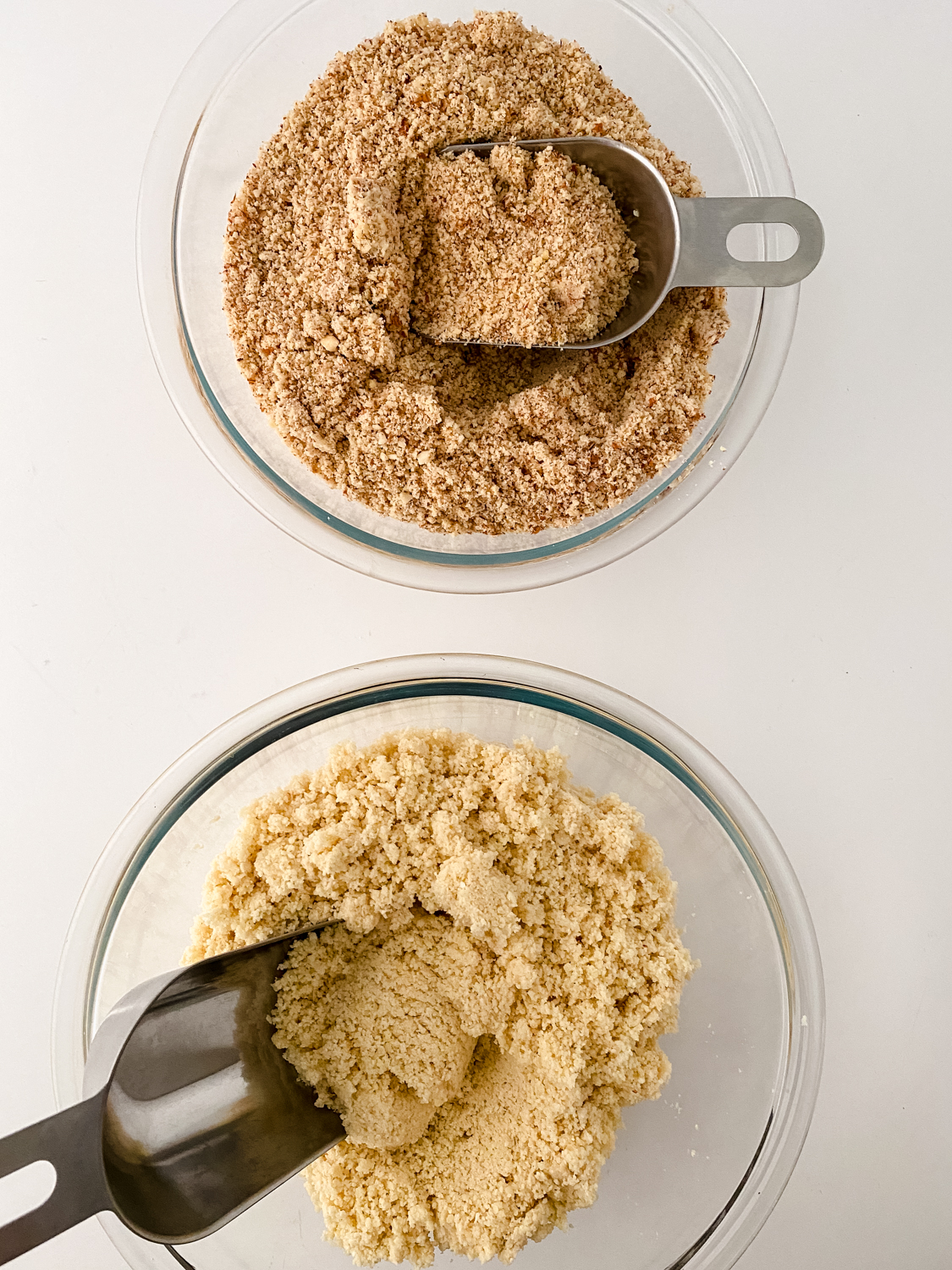
Is ground almond the same as almond flour
Ground almonds and almond flour are often used interchangeably, but there are subtle differences between the two.
Ground almonds are simply whole almonds that have been ground into a fine powder. Depending on how finely they are ground, they may contain some larger almond particles, resulting in a slightly coarser texture compared to almond flour.
Almond flour, on the other hand, is typically made from blanched almonds (almonds with the skins removed) that are ground into a finer, more uniform powder.
This results in a smoother texture and lighter color compared to ground almonds.
In practical terms, they can often be used interchangeably in recipes, but the texture and appearance of the final product may vary slightly depending on which one you use.
Can you use a coffee grinder to make almond flour?
Yes, a coffee grinder can be used to make almond flour at home. However, it's essential to ensure that the coffee grinder is clean and free of any coffee residue, as this can affect the flavor of the almond flour.
Additionally, it's recommended to grind the almonds in small batches to ensure even grinding and prevent the grinder from overheating. Grinding too much at once may result in uneven texture or clumping. Overall, while a coffee grinder can be a convenient tool for making almond flour, it's important to be mindful of these considerations for best results.
How Blanched Almond Flour is Made
- Blanching the Almonds:
- Boil Water: Bring a pot of water to a boil.
- Blanch the Almonds: Remove the pot from heat and pour the boiling water over the raw almonds. Let them sit for about 2 minutes.
- Cool and Peel: Drain the almonds and rinse them under cold water. The skins should slip off easily.
- Drying: Spread the peeled almonds on paper towels and let them dry completely. This can take a few hours to ensure they are thoroughly dry.
- Grinding: Once dry, add the blanched almonds to a food processor and grind until a fine, consistent flour is achieved. Be careful not to over-process, as this can turn the almonds into almond butter.
Benefits of Blanched Almond Flour
- Smooth Texture: Blanched almond flour has a finer, smoother texture than regular almond flour, which can be beneficial for baking delicate pastries and cakes.
- Lighter Color: Without the almond skins, the flour has a lighter color, which can be aesthetically pleasing for certain recipes.
- Mild Flavor: Removing the skins can also result in a milder flavor, which may be preferred in some baked goods where a strong almond flavor is not desired.
- Nutritional Benefits: Blanched almond flour retains most of the nutritional benefits of almonds, including being rich in healthy fats, protein, and fiber, while being low in carbohydrates. It also contains essential vitamins and minerals such as vitamin E, magnesium, and calcium.

I hope that you found this post about how to make almond flour useful. Share it with your friends on social media and you can also Pin it for later.
You might also like these posts...
-
Gluten Free Valentines Cookies Recipe (Keto & Dairy Free)
-
30 Of The Best Vegan and Gluten Free Pancake Recipes
-
Vegan French Onion Chicken Recipe (Dairy-Free)
-
Easy Gluten Free Vegan Caramelized Onion Dip Recipe




Related Posts

Natural and Nurturing: A Guide to Vegan and Cruelty-Free Skin Treatments-
Homemade Festive Christmas Tree Tortilla Chips -
Is Keratin Vegan? Plant-Based Keratin Treatment Alternatives



Comments
No Comments